


Invoicing in Switzerland: What You Need to Know

Why issuing correct invoices matters
For many sole proprietors, issuing invoices is part of everyday business. An invoice is more than just a request for payment. It is a legal document that secures your claim to payment and serves as the basis for tax and accounting processes.
Incorrect invoices can lead to delayed payments, problems with VAT deduction, or even legal uncertainty. In Switzerland, there are clear requirements and best practices you should be aware of to ensure your invoices are clear, professional, and legally compliant.
What a legally compliant invoice must include
Even if you are not a trust office or accountant, understanding the essential components helps you invoice confidently and professionally. In Switzerland, invoices must generally include the following elements:
- Invoice issuer –that’syou
Your invoice must contain your full details. This includes your name or business name, address, and—if applicable—your UID number and VAT number if you are subject to VAT.
- Invoice recipient
The full name and address of the recipient must also be stated. While there are exceptions for very small amounts under CHF 400, it is best practice to always include complete recipient details.
- Invoice number and date
Each invoice should have a unique, sequential invoice number. This allows both you and your customer to clearly identify the invoice. The issue date must also be clearly visible.
- Description of services or goods
The invoice must contain a clear and understandable description of the services or products provided. This includes specifying what was delivered and, if relevant, the period during which the service was performed.
- Pricing and total amount
Your customer must be able to clearly see what is payable. Individual prices and the total amount should be clearly stated. If you are subject to VAT, you must show the net amount, the applied VAT rate, and the total amount including VAT.
- VAT information
If you are subject to VAT, you must state your VAT number in the format “CHE-xxx.xxx.xxx MWST” and clearly show how much VAT is included in the total amount. If you are not subject to VAT, you may indicate that no VAT is charged.

Additional elements that are helpful
Beyond the mandatory requirements, certain elements make invoicing easier for both you and your customers:
Payment terms and deadlines
Specify a clear payment due date or payment period. This creates transparency and reduces misunderstandings.
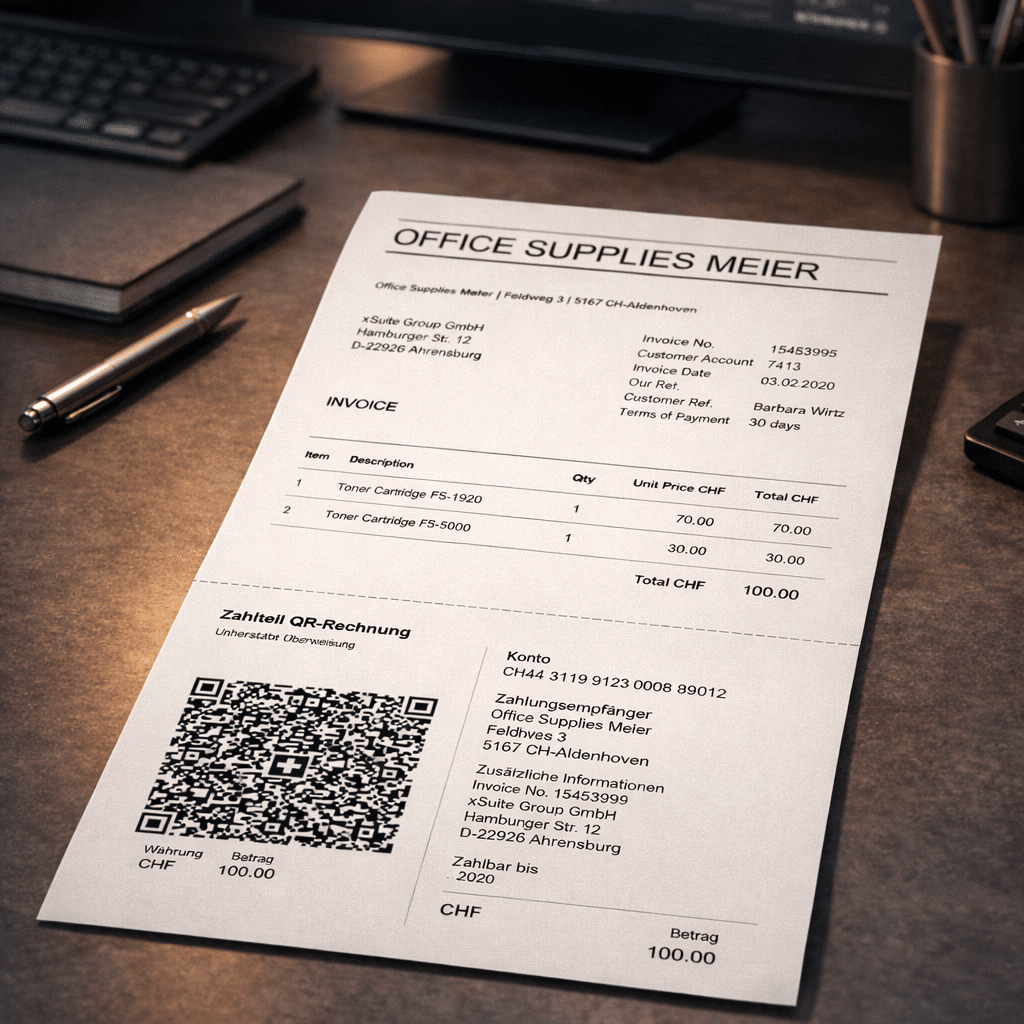
Bank details or QR-bill
In Switzerland, you can use QR-bills, which include a QR code with all relevant payment information. This simplifies payment and supports digital processing.
Special considerations for VAT-registered businesses
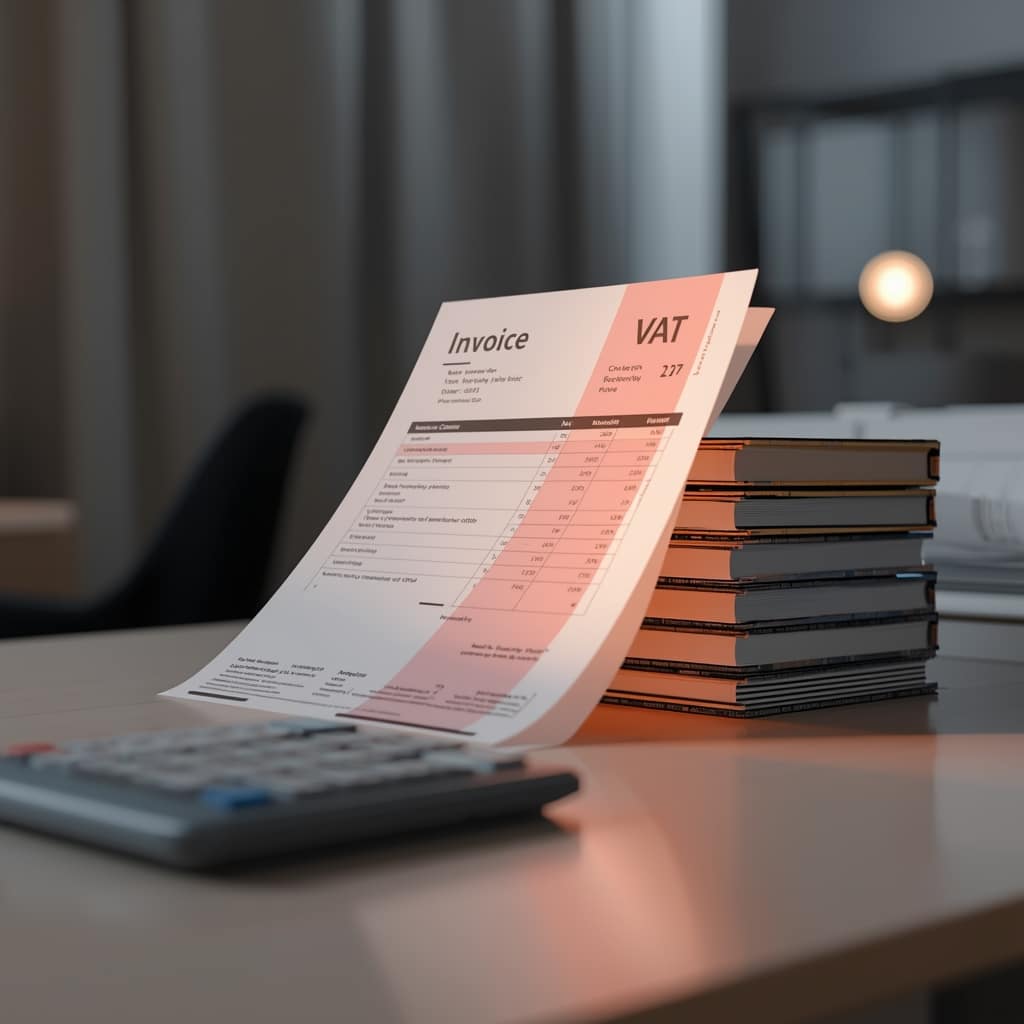
If your annual turnover exceeds CHF 100,000, your business becomes subject to VAT in Switzerland. From this point on, additional invoicing requirements apply so that your customers can claim input tax deductions. This includes correct VAT declaration and clearly displaying your VAT number on the invoice.
How correct invoicing supports your business
Properly issued invoices do more than meet formal requirements. They support:
- smooth payment processing
- healthy cash flow
- efficient accounting
- accurate tax reporting
Incorrect or incomplete invoices often lead to delayed payments and additional administrative work for you or your trust office.
Conclusion: Issue invoices professionally and with confidence
In Switzerland, a correct invoice is a central element of professional business practice. It provides clarity for you and your customers and ensures legal and tax compliance.
By following these fundamentals, you are well prepared to issue clean, professional invoices with confidence.